
Think4Ever - Turn Ideas into Integrated Systems. Instantly

1. Executive Summary
As AI coding agents become ubiquitous, software bottlenecks have shifted from writing syntax to maintaining architectural integrity. "Code-First" assistants often fail to maintain global coherence, leading to architectural drift and technical debt. Think4Ever addresses this via a "Design-First" protocol that formalizes system architecture, data contracts, and service boundaries before coding begins.
2. The Problem: The "Code-First" Collapse
Current market leaders like Claude Code and Cursor operate on high-context, iterative loops focused on immediate file-level implementation. This creates systemic issues:
- Incremental Entropy: Agents lacking a rigid blueprint introduce competing schemas and leaky abstractions in large codebases.
- Contextual Fragmentation: Even with large token windows, agents "hallucinate" consistency, making locally optimal but globally destructive changes.
- The Orchestration Gap: Humans remain the sole orchestrators, manually fixing integration failures across broad scopes.
3. The Think4Ever Approach: Architecture as the Source of Truth
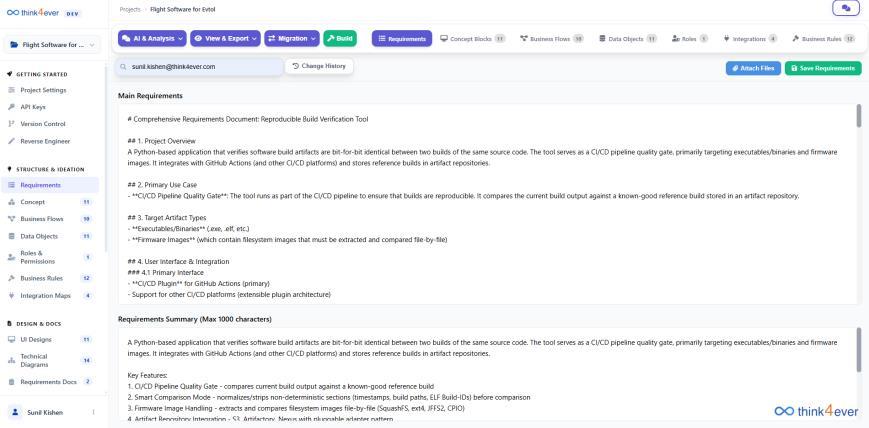
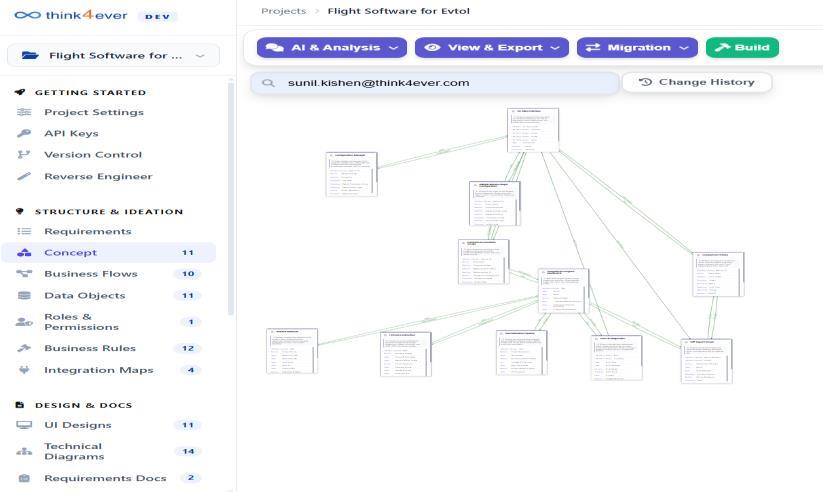
Think4Ever flips the development lifecycle, treating the System Design Document (SDD) and Architectural Decision Records (ADR) as the "Source of Truth" rather than existing code.
Key Pillars:
- The Architect Agent: Deploys a high-reasoning agent to map service boundaries, C4 diagrams, and API contracts before implementation.
- Formalized Contracts: An "Architectural Linter" validates all generated code against the initial design to enforce data ownership and interface definitions.
- Constraint-Based Generation: Agents implement specific design components within predefined architectural constraints.
- Multi-Agent Orchestration: Orchestrated Architect, Developer, and QA agents have direct access to terminals, databases, and CI/CD pipelines.
4. Addressing Diverse Market Needs
Think4Ever functions as a fully orchestrated AI engineering team across various segments:
-
Individual Users ("Vibe Coding")
High-velocity creation from natural language ideas to running apps.
Example: Building a fitness app with automated backend generation.
-
Product Managers
Functional prototyping directly from business requirements to validate flows without engineering sprints.
Example: Demonstrating a live loyalty rewards feature with a working data model.
-
Small Businesses
Automating core processes with minimal overhead.
Example: Real estate lead intake automation connecting web forms to internal APIs.
-
Consulting & Agencies
Scalable engine for delivering complex custom solutions with increased margins.
Example: Handling heavy architectural lifting for custom retail inventory systems.
5. Solving the Enterprise Crisis
Large enterprises are hamstrung by technical debt and resource scarcity. Think4Ever resolves these "wicked" problems:
- System Coherence: Acts as a coherence layer to ensure code stays correct as requirements change, addressing the 60% of project delays Gartner links to rework.
- Governed Autonomy: Closes the gap for the 74% of enterprises citing governance as a barrier by automating data lineage and providing transparent audit trails.
- Legacy Refactoring: Ingests "black box" legacy code to reverse-engineer documentation and execute safe refactoring into modern architectures.
- Digital Augmentation: Clears 18–24 month backlogs by allowing staff to move from "coders" to "orchestrators" leading a fleet of agents.
- Security & Compliance: Treats security as a core architectural layer, automatically generating security diagrams and validating code through automated test scripts.
6. Case Study: Digital Banking & Payment Networks
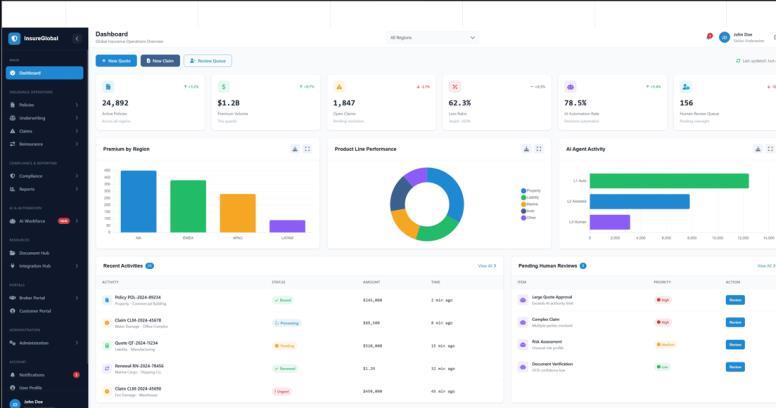
The Challenge: A global insurance company building a comprehensive client facing policy generation and claims processing application to support insurance business across multiple countries.
The Think4Ever Approach:
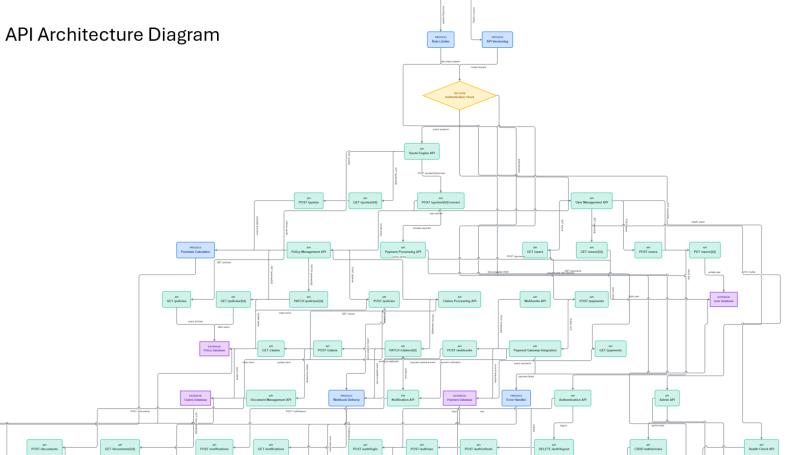
1. Unified Architecture: Starts with ERDs and API diagrams enforced across all modules.
2. Simultaneous Execution: Specialized agents design and architect the application to support for policy and quote generation, underwriting, claims processing, reinsurance, compliance management.
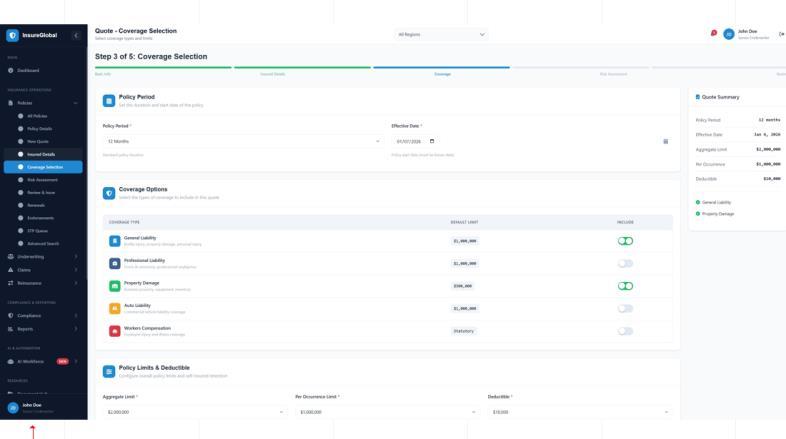
3. Result: A production-ready insurance company front end and backend delivered with 10× velocity where the architecture is the source of truth.
7. Summary: Architecture as the "New Compiler"
In 2026, maintenance is expensive while code is cheap. Think4Ever enables teams to build complex, enterprise-grade applications resilient to the chaos of automated generation by moving the "thinking" to the architecture layer.